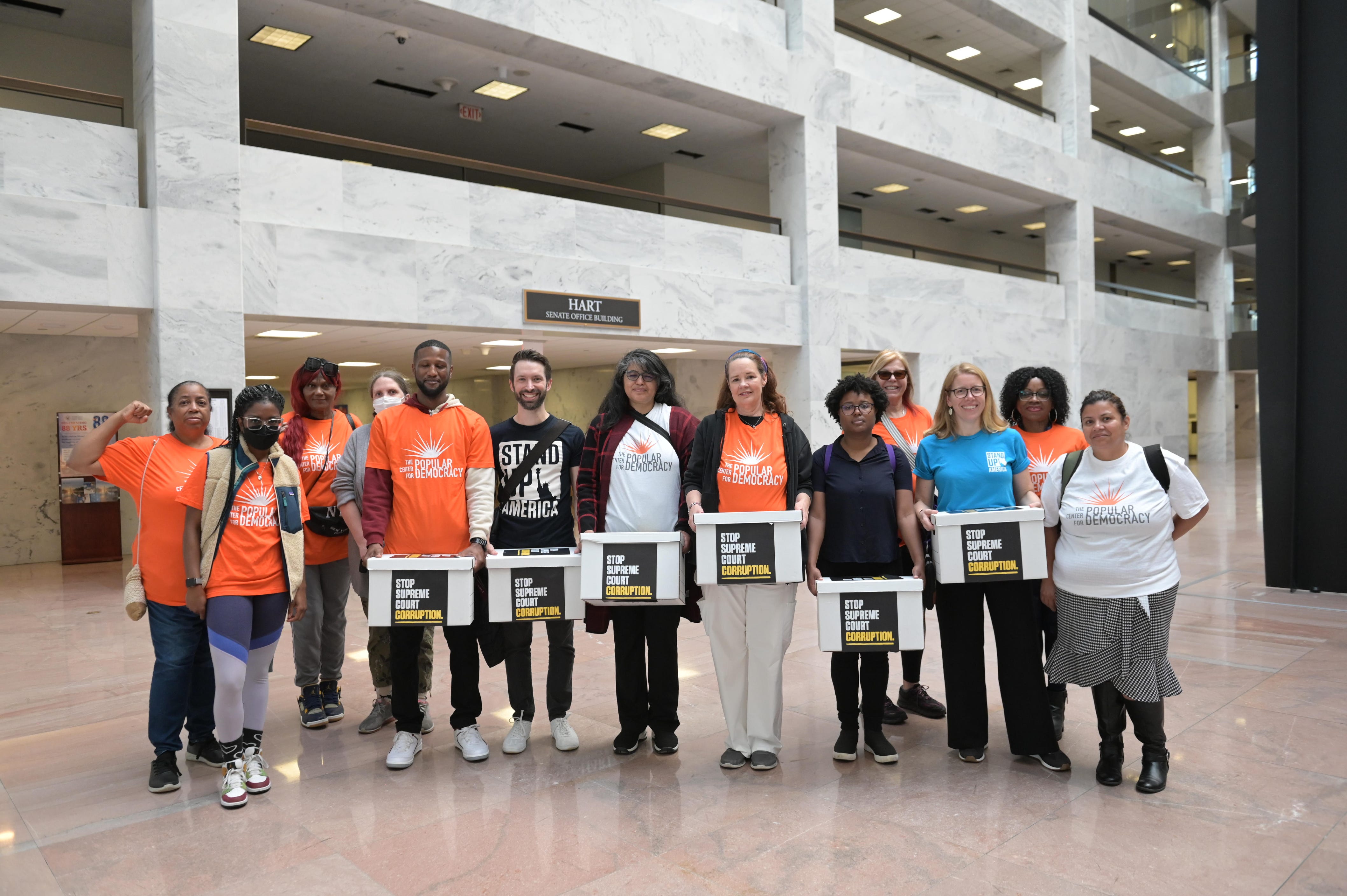
🏛️ What’s Happening Right Now at the Supreme Court
Who controls access to justice when powerful institutions disagree about the law?
Recent Supreme Court developments raise questions about online privacy, criminal sentencing, political advertising, and constitutional protections for people in immigration detention.
These cases involve different laws, but all raise questions about who holds power, how rights are protected, and whether people can challenge government or corporate actions.
The justices also determine who can sue, how much authority federal agencies hold, and which procedures apply.
Those decisions can determine whether cases move forward, how long people remain imprisoned, and whether government power faces meaningful scrutiny.
The rule of law depends on accountability at every stage.
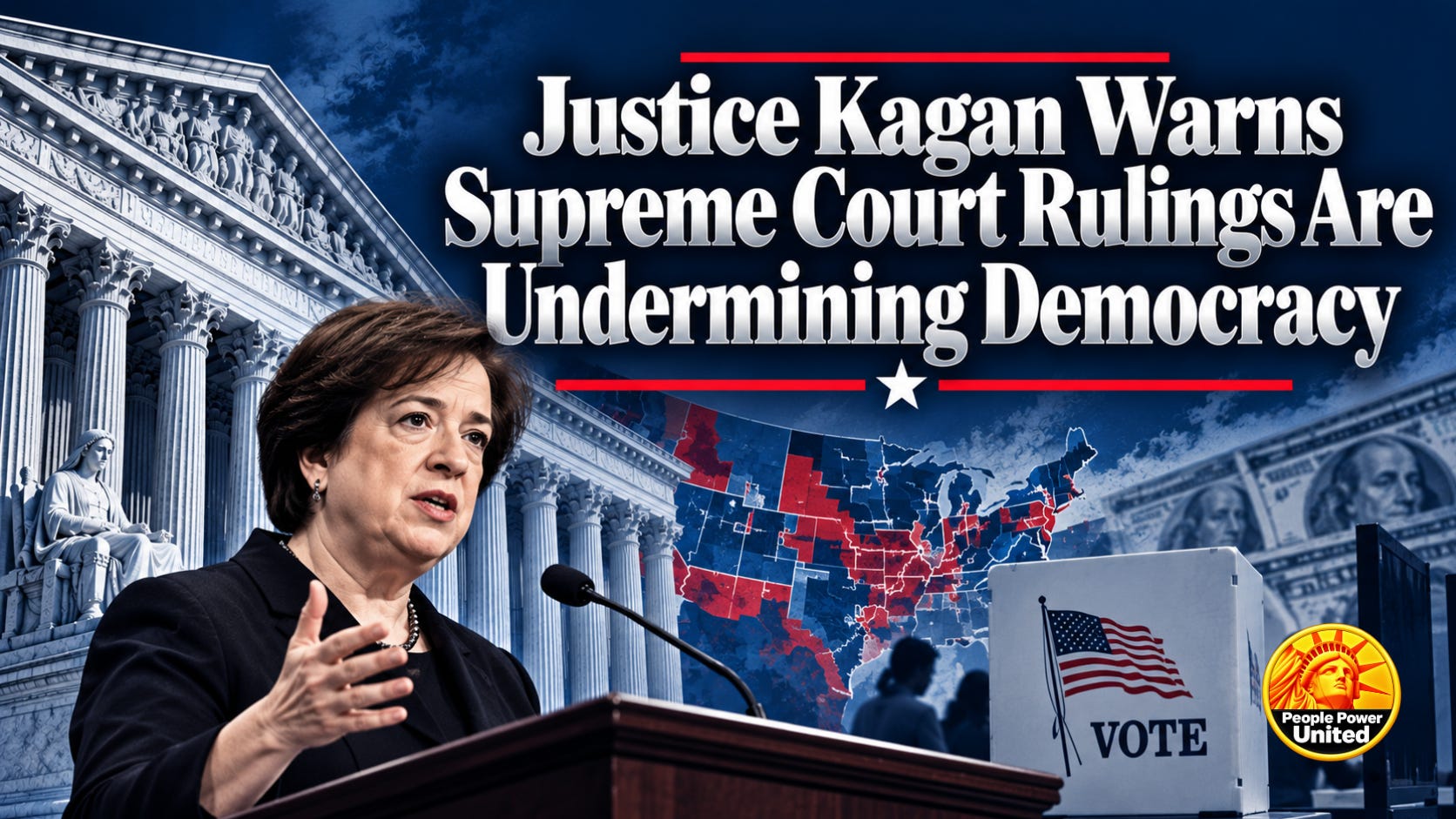
⚖️ Justice Kagan Warns Supreme Court Rulings Are Undermining Democracy
On October 20, Justice Elena Kagan publicly criticized the Supreme Court’s conservative majority, warning that recent decisions threaten democratic safeguards.
Speaking at Catholic University’s Columbus School of Law, Kagan pointed to rulings weakening campaign finance restrictions, limiting Voting Rights Act protections, and allowing aggressive partisan redistricting.
She warned that the Court’s approach had encouraged a “race to the bottom” in redistricting and created a “nightmare” of unrestricted election spending.
Supporters of the majority’s decisions argue that constitutional protections for political speech and limits on judicial involvement in partisan disputes justify these outcomes. NBC News
Why it matters: Kagan’s comments raise fundamental questions about electoral fairness, the influence of money in politics, and whether the Court adequately considers the democratic consequences of its decisions.

🔒 Will the Supreme Court Protect Your Online Video Privacy?
On October 14, the Supreme Court heard Salazar v. Paramount Global, examining whether a federal privacy law enacted in 1988 protects certain online video viewers.
Michael Salazar alleges that Paramount shared information about videos he watched on 247Sports with Facebook through tracking technology without his consent.
He argues that his free newsletter subscription makes him a protected consumer under the Video Privacy Protection Act.
Paramount disagrees, arguing that subscribing to a newsletter does not automatically qualify someone for protections intended for subscribers to audiovisual services.
The Sixth Circuit previously ruled against Salazar. The Supreme Court has not issued a final decision. Washington Post Supreme Court docket
Why it matters: Millions of people encounter online tracking without fully understanding how information is collected or shared. The ruling could help determine how far existing federal privacy protections extend into the digital world.
🗳️ Supreme Court Halts Deadline in Political Advertising Dispute
On October 14, the Supreme Court temporarily blocked a federal appeals court order requiring the Federal Communications Commission to decide a political advertising dispute within 48 hours.
In FCC v. Brown, the dispute concerns discounted broadcast advertising rates available to political candidates and certain political organizations.
Four congressional candidates challenged the FCC’s interpretation, arguing that the law reserves those favorable rates for candidates.
The appeals court had ordered the agency to issue a rapid decision. The Supreme Court concluded that the order improperly interfered with the FCC’s discretion over its deliberations. National Law Journal
Why it matters: The decision affects how quickly the dispute can move through the agency and courts. It does not finally resolve which political organizations qualify for discounted advertising rates.
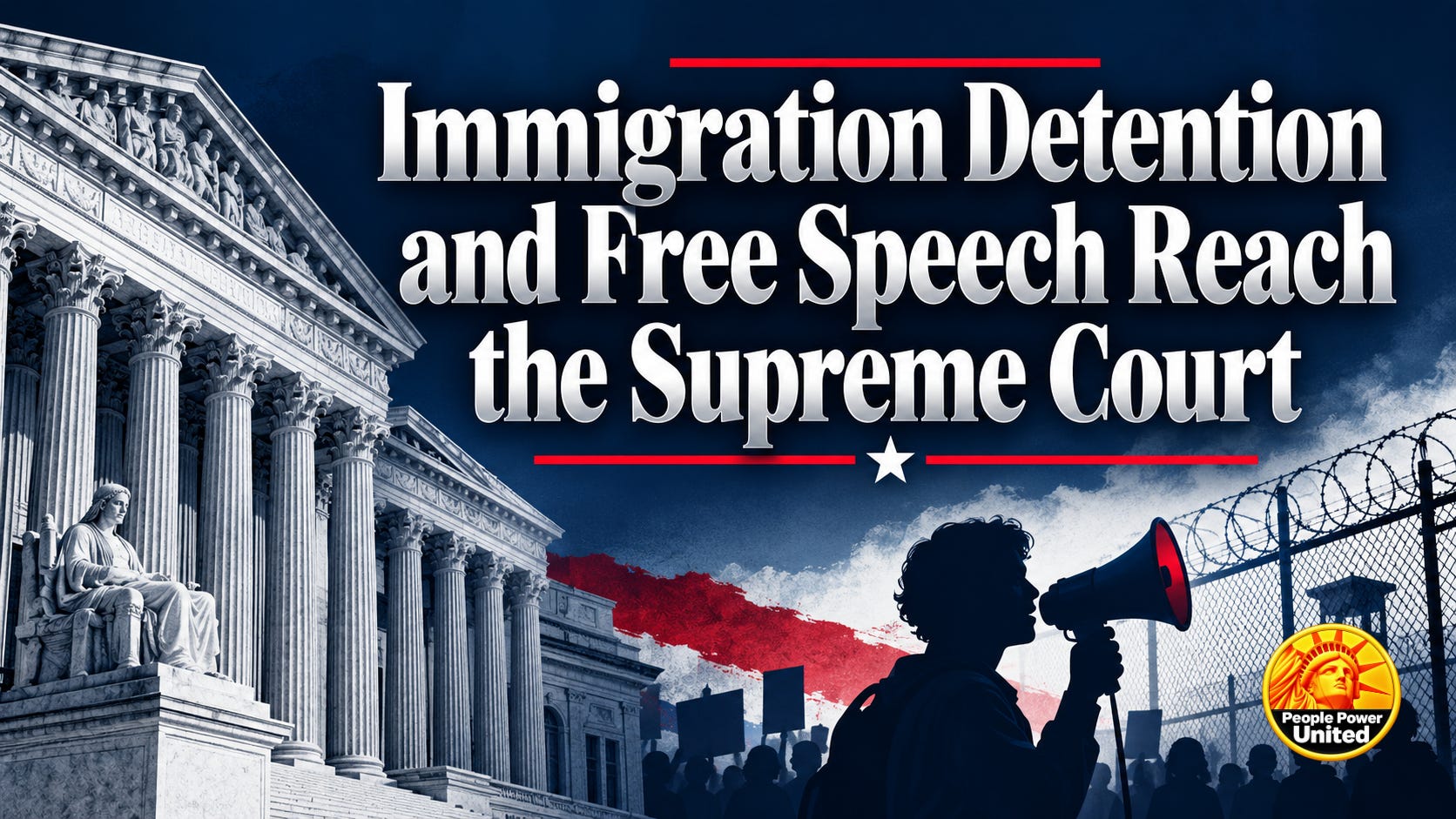
🗣️ Immigration Detention and Free Speech Reach the Supreme Court
On October 19, Mahmoud Khalil asked the Supreme Court to review a ruling limiting federal district courts’ authority to intervene in certain immigration detentions.
Khalil, a lawful permanent resident and former Columbia University student, was detained following his involvement in pro-Palestinian demonstrations.
His attorneys argue that immigration detention intended to punish constitutionally protected speech must remain subject to prompt federal judicial review.
The administration disputes that characterization and maintains that its actions were lawful under immigration law.
A federal appeals court ruled that Khalil’s claims must proceed through immigration review procedures. An order preventing his re-detention remains in effect for now. Center for Constitutional Rights
Why it matters: The petition raises consequential questions about free speech, executive authority, and whether people facing allegedly retaliatory detention can obtain timely protection from federal courts.
The Supreme Court has not agreed to hear the case.
⚖️ Why These Stories Matter
The cases involve different legal questions, but together they demonstrate how procedural rules can determine access to justice.
Privacy protections depend on statutory definitions. Regulatory disputes depend on the boundaries of agency and judicial authority. Immigration detention challenges depend on access to meaningful review.
Accountability requires more than promises of fairness. It requires institutions that follow the law and remain open to scrutiny.
👀 What We’re Watching
Online privacy: A decision remains pending in Salazar v. Paramount Global.
Federal sentencing: The justices have not ruled in Beaird v. United States.
Political advertising: The FCC dispute continues after the October 14 stay.
Immigration detention: The justices must decide whether to hear Khalil’s petition.
📣 Accountability Actions
Supreme Court accountability begins with an informed public and institutions that answer to the people.
⚖️ Take Action» Tell Your Member of Congress: Expand the Supreme Court to protect voting and civil rights, create term limits, and institute a code of ethics.
🔎 Follow Supreme Court cases, orders, and opinions directly
📋 Read official oral argument transcripts
Demand transparency. Support meaningful judicial ethics standards. Defend equal access to justice.
Judicial independence must never become immunity from accountability.
💙 One Thing to Carry With You
Justice is not simply what happens when nine justices announce a decision.
It is also whether our privacy is protected, our government respects constitutional rights, and ordinary people can challenge powerful institutions.
No one should be above accountability. No one should be denied the protection of the law.
We have the power to stay informed, speak out, and demand transparency.
The future is not lost. It is being built by us, right now.
Laurie Woodward Garcia (paid with hugs and kisses, not bought by special interests)
People Power United | In this community, we will always speak out against racism, xenophobia, Islamophobia, antisemitism, homophobia, misogyny, sexism, ageism, ableism, sizeism, elitism, transphobia, misogynoir, and bigotry!