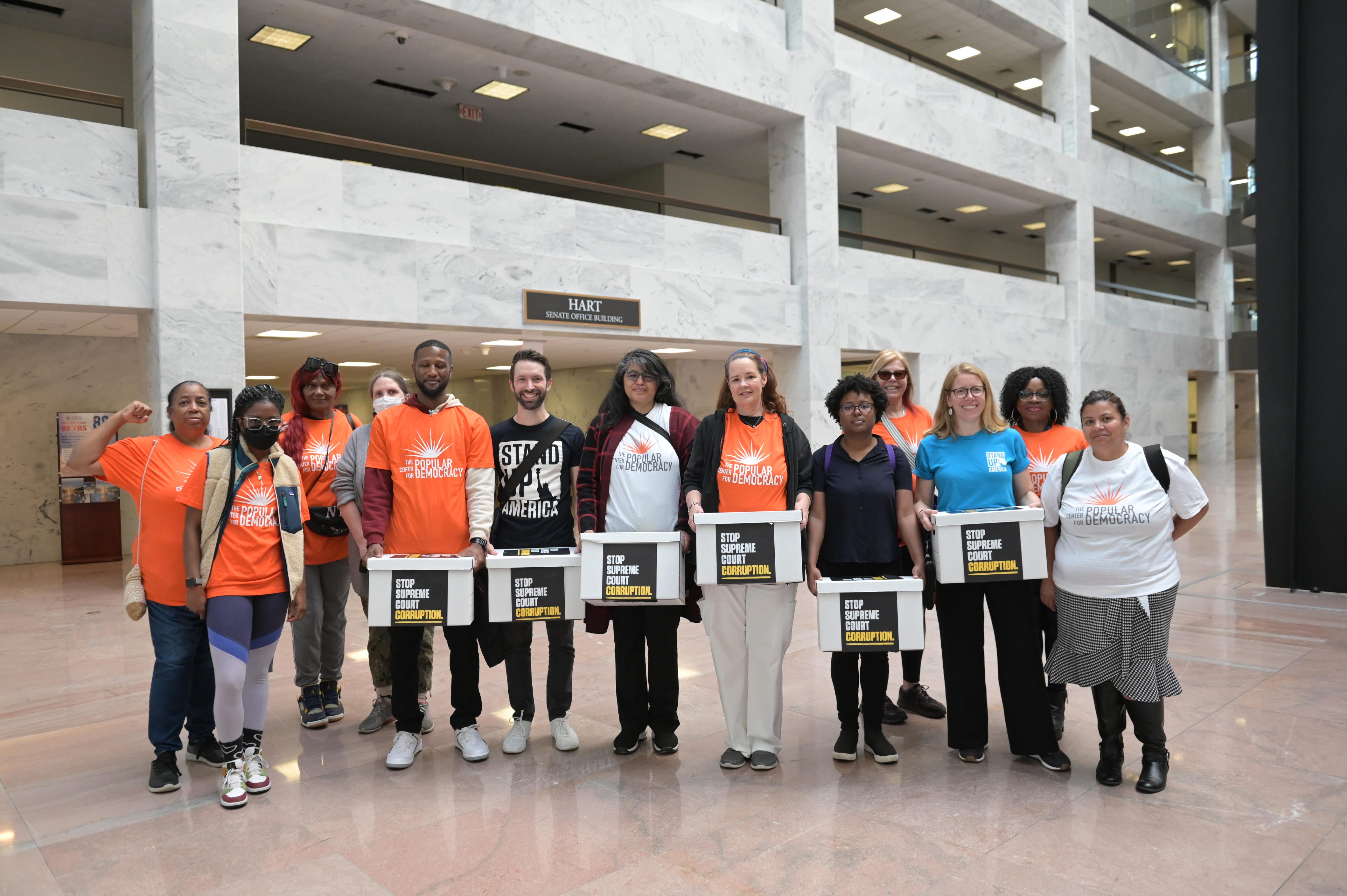
🏛️ What’s Happening Right Now at the Supreme Court
The Supreme Court opened its new term with cases that could shape whether communities can demand accountability from powerful industries, veterans can challenge federal laws, workers can protect their retirement savings, and residents of Guam can demand environmental oversight.
Four cases. Four different legal questions. One institution with enormous power over our lives.
No final rulings have been issued in these cases. But the arguments reveal what is at stake, and why public attention matters.
🏛️ The Courts Are Drawing Lines Around Power
The rule of law means little if ordinary people cannot use it to challenge powerful institutions.
This week’s cases ask whether federal law limits local lawsuits, where constitutional claims can be heard, what workers must prove to challenge retirement decisions, and when environmental review is required.
The central question is whether accountability remains accessible to everyone, not just those with the resources to navigate the legal system.
🌎 Can Communities Hold Big Oil Accountable for Climate Damage?
On October 5, the Supreme Court heard Suncor Energy v. County Commissioners of Boulder County, a case that could shape climate accountability lawsuits nationwide.
Boulder officials accuse ExxonMobil and Suncor Energy of contributing to climate-related harms and misleading the public about the dangers of fossil fuels. They want the companies to help pay for local damages.
The companies dispute the legal basis for the lawsuit, arguing that federal law prevents states from pursuing these claims. The justices must also consider whether the case is properly before them. As we reported earlier, Justice Samuel Alito recused himself because of financial interests. The Guardian
Why it matters: Communities confronting rising climate costs want access to the courts. The justices have not decided whether the companies are liable. They are considering whether these claims can proceed.
🎖️ Can Veterans Challenge Federal Laws That Affect Their Benefits?
The Supreme Court heard Johnson v. United States Congress on October 5, raising a fundamental question about veterans’ access to constitutional review.
Floyd Johnson challenges a federal law limiting benefits for incarcerated veterans. His case asks whether federal district courts can hear constitutional challenges to laws governing veterans’ benefits or whether those claims must proceed through the specialized veterans’ review system.
Johnson argues that Congress did not eliminate district courts’ authority to consider these constitutional questions. The government argues that Congress established a specialized process that also applies to such challenges. The Supreme Court
Why it matters: The Court’s eventual ruling could determine where veterans may bring constitutional claims involving benefits laws. The justices are deciding a jurisdictional question, not whether the challenged benefit restrictions themselves are constitutional.
💰 Who Protects Workers’ Retirement Savings?
On October 6, the Supreme Court heard Anderson v. Intel Corporation Investment Policy Committee, examining how workers can pursue lawsuits challenging retirement-plan investment decisions.
Former Intel employees allege that managers of company retirement plans made imprudent investment choices involving costly and underperforming alternative assets, including hedge funds and private equity.
Their argument is that workers should be able to challenge a fiduciary’s decision-making without first identifying a sufficiently comparable investment fund.
Intel argues that meaningful investment comparisons are necessary to support allegations that plan managers acted imprudently. The Supreme Court
Why it matters: This case could affect the evidence workers must present before courts will consider claims about mismanaged retirement savings. The Court is not deciding whether every alternative investment is inappropriate. It is considering the legal threshold for these lawsuits.
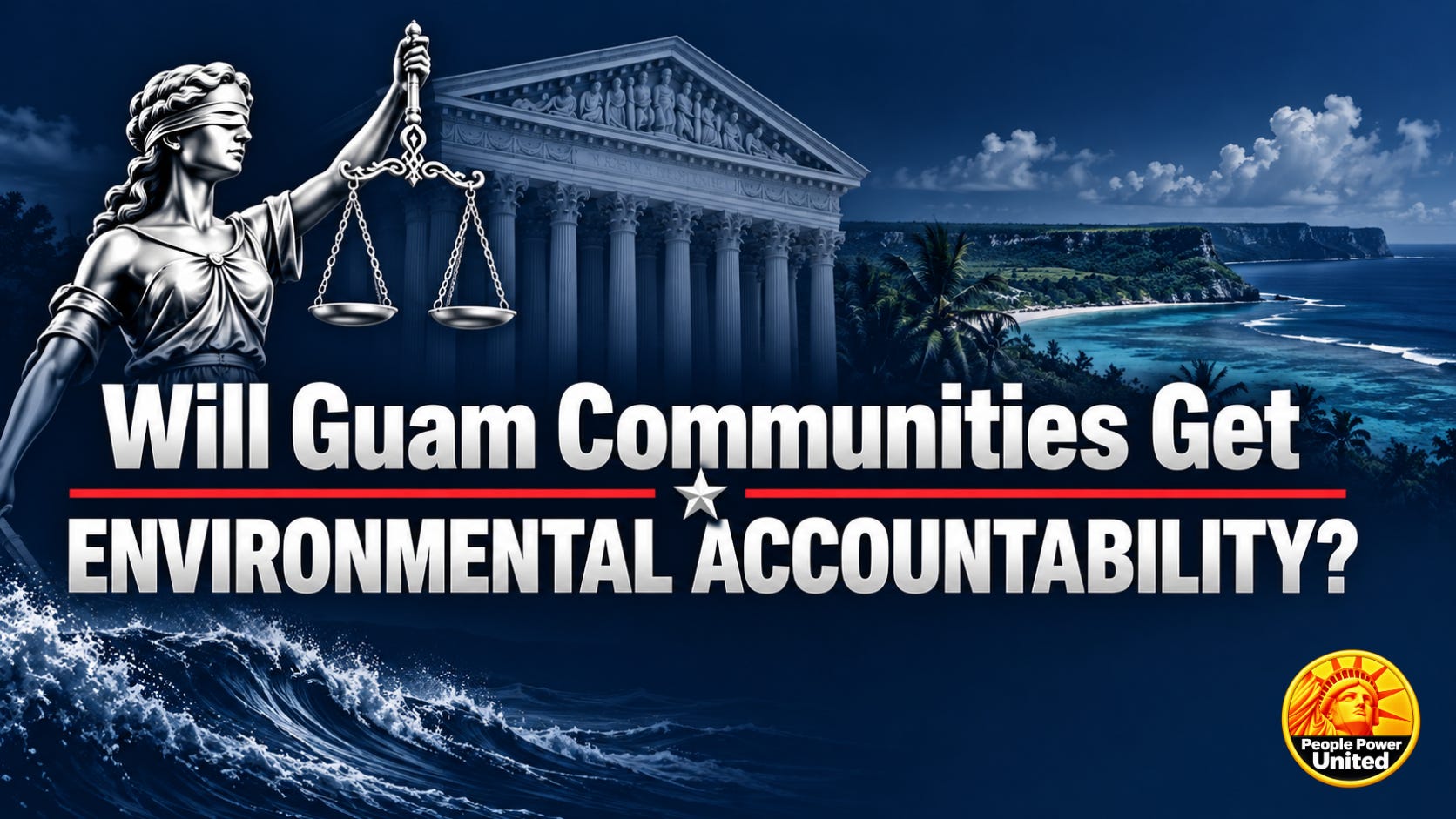
🏝️ Will Guam Communities Get Environmental Accountability?
On October 7, the Supreme Court heard Department of the Air Force v. Prutehi Guåhan, involving hazardous-waste disposal and environmental oversight in Guam.
Community advocates challenged the Air Force’s permit-renewal process for a military munitions-disposal site, raising concerns about contamination and the potential effects on the island’s environment.
The central legal questions concern whether the Air Force’s permit application constituted a final agency action and whether the National Environmental Policy Act required additional review.
The Air Force argues that the application was not final agency action and that the governing hazardous-waste law controls the review requirements. Earth Justice
Why it matters: Communities affected by military operations deserve meaningful avenues for environmental oversight. The eventual ruling could determine when residents may challenge federal agency decisions and what environmental procedures those decisions require.
⚖️ Why These Stories Matter
These cases concern different laws, but they expose a common challenge: Access to justice depends on the rules governing who can sue, where claims can be heard, and what evidence must be presented.
Accountability should not depend on wealth, geography, employment status, or political influence.
Courts must apply the law fairly, explain their decisions, and remain answerable to constitutional principles.
👀 What We’re Watching
Climate accountability: Whether Boulder may pursue its claims against major oil companies.
Veterans’ rights: Whether constitutional challenges can proceed in federal district court.
Retirement protections: What workers must allege to challenge plan-management decisions.
Guam environmental oversight: When military permit applications trigger judicial review and environmental obligations.
Decisions remain pending. Watch the official Court docket for updates.
📣 Accountability Actions
Supreme Court accountability begins with an informed public and institutions that answer to the people.
⚖️ Take Action» Tell Your Member of Congress: Expand the Supreme Court to protect voting and civil rights, create term limits, and institute a code of ethics.
🔎 Follow Supreme Court cases, orders, and opinions directly
📋 Read official oral argument transcripts
Demand transparency. Support meaningful judicial ethics standards. Defend equal access to justice.
A Complete Guide: No Kings Vote Early is now available
Get the information you need to make your No Kings Vote Early voting plan, understand early voting options, and know what to expect before you cast your ballot. Make a plan, check the details, and be ready to vote early.

📢 Check out A Complete Guide: No Kings Vote Early - October 17, 2026
📍 Find a No Kings: Vote Early event near you
🙋 Host a No Kings: Vote Early event
Can’t find an event near you? Bring one to your community. Gather your neighbors. Help make sure every voice is heard.
💙 One Thing to Carry With You
Justice is not an abstract idea reserved for marble halls and legal textbooks.
It lives in the retirement savings workers depend on, the benefits veterans have earned, the air our children breathe, and the land and water our communities call home.
No institution should be beyond accountability. No person should be beneath the protection of the law.
Our responsibility is to pay attention, ask questions, defend our freedoms, and demand that powerful institutions serve the people.
We do not need to agree with every court decision to insist on transparency, fairness, and an equal measure of justice.
Power belongs to the people who show up, speak out, and refuse to surrender their voice. The future is not lost. It is being built — by us, right now.
Laurie Woodward Garcia (paid with hugs and kisses, not bought by special interests)
People Power United | In this community, we will always speak out against racism, xenophobia, Islamophobia, antisemitism, homophobia, misogyny, sexism, ageism, ableism, sizeism, elitism, transphobia, misogynoir, and bigotry!